[caption id="" align="alignnone" width="349"]
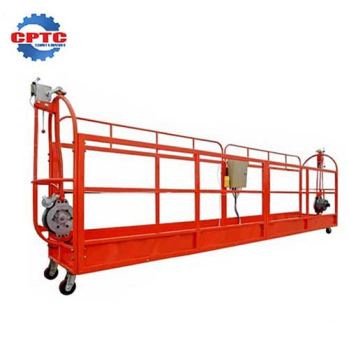 Construction Platform[/caption]
[caption id="" align="aligncenter" width="500"]
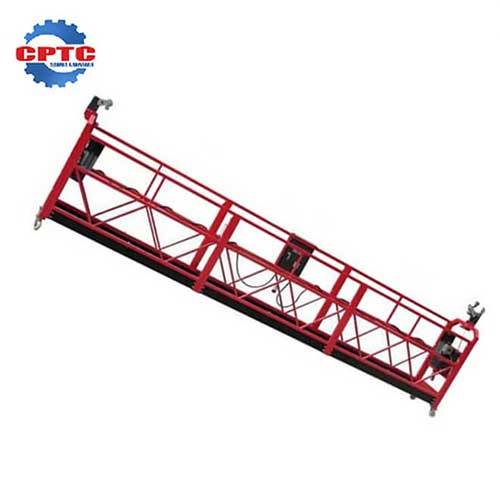 ZLP Series Suspended Platform[/caption]
Key Regulatory & Industry Limits
Globally recognized standards and regulations set baseline wind speed thresholds to prevent platform instability, sway, or collapse:
- OSHA Standard (U.S.): The Occupational Safety and Health Administration (OSHA) specifies that operations must be reassessed or halted when sustained or gusting winds exceed 20 mph (32 km/h) at the platform level. A qualified person must determine if conditions remain safe above this limit.
- EU & Chinese Standards: European (EN 1808:2015) and Chinese (GB/T 19154-2017, GB/T 19155-2017) standards align on platform type-based limits: 14 m/s (50.4 km/h) for unguided (free-suspended) platforms and 20 m/s (72 km/h) for guided (constrained) systems.
- Industry Recommendations: For two-point suspended platforms, the Scaffolding Shoring & Forming Institute (SSFI) recommends stopping work at 25 mph (40 km/h); for single-point systems, the limit is 20 mph (32 km/h) if no site-specific hazard assessment exists.
Critical Variables That Impact the Limit
Even with baseline limits, site-specific factors can lower the safe wind speed:
- Platform Type: Unguided (temporary) are far more wind-sensitive—their safe limit drops to 8.3 m/s (30 km/h, ~5 wind) in practical job site use, as they lack structural constraints to limit sway.
- Height & Rope Length: When working rope length exceeds 40 m, wind effects amplify dramatically. Regulations require guided systems or stricter wind limits for heights above this threshold.
- Site Conditions: Wind tunnels between buildings, exposed high-rise locations, or materials that create a “sail effect” (e.g., plywood, windows) can increase wind intensity at the platform, requiring lower operational limits.
Non-Negotiable Safety Practices
To comply with limits and protect workers:
- Use an anemometer to monitor real-time wind speeds at the platform (not ground level) before and during operations.
- Halt operations immediately if wind exceeds the applicable limit—“temporary” operation in high winds risks catastrophic failure, including platform collision or falling loads.
- Prioritize manufacturer guidelines: Some platforms have stricter limits than regulatory standards; always check the equipment manual.
- Assign a qualified person to assess wind conditions and halt work if hazards (e.g., excessive sway) are present, even if speeds are below baseline limits.